AGI Organises Corporate Forum at Tang Palace Hotel
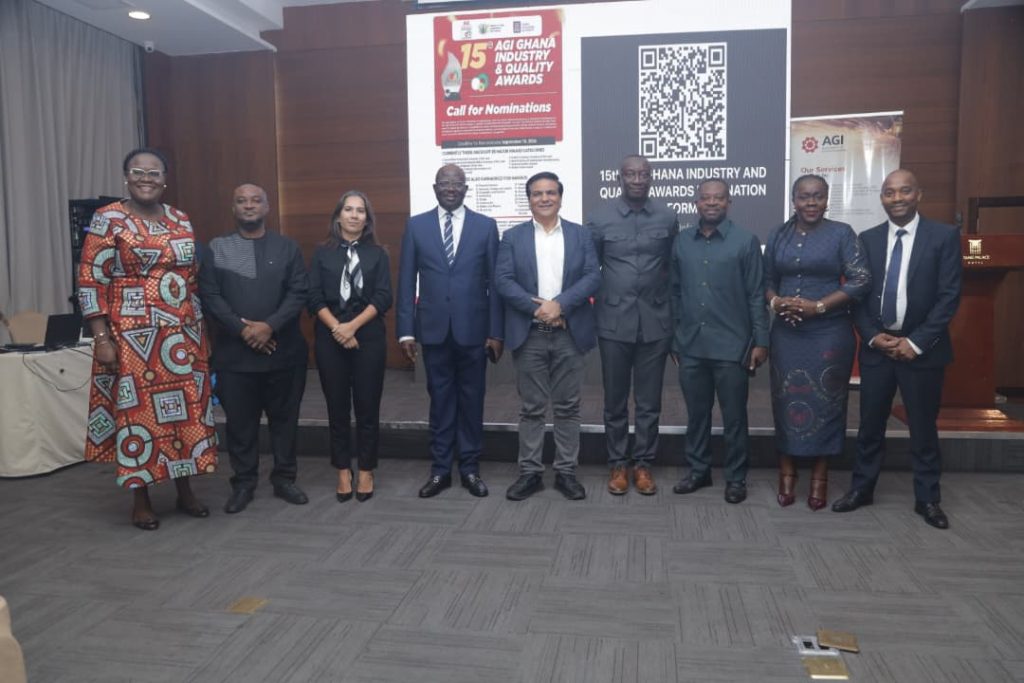
The Association of Ghana Industries (AGI) has organised a corporate forum at the Tang Palace Hotel in Accra to engage the Ministry of Finance and the Ghana Revenue Authority (GRA) on key economic and policy issues affecting the alcoholic beverage industry and the broader business community.
Delivering the keynote address, AGI President, Pharm. Kofi Nsiah-Poku, said the improving macroeconomic environment was beginning to create greater certainty for businesses, noting that the relative stability of the cedi and the decline in inflation to single-digit levels were enabling businesses to forecast input costs with greater confidence.
“With the cedi far less volatile and inflation down to single digits, the business community is able to forecast input costs with greater confidence,” he said.
Pharm. Nsiah-Poku noted that greater certainty in economic conditions was itself a form of value creation for industry, as it influences how businesses budget, price their products and services, make investment decisions and commit resources towards expansion.
He urged Government to sustain the gains achieved at the macroeconomic level while paying greater attention to the microeconomic conditions confronting businesses, particularly the cost of doing business, access to finance, energy costs, taxation and other operational challenges that directly affect productivity and competitiveness.
Accra Brewery Company Limited, speaking on behalf of alcoholic beverage manufacturers, raised serious concerns over the recent revision of excise duties warning that the proposed increases could negatively affect the operations and competitiveness of local producers if implemented.
The company said the revised excise duty regime, which provides for increases of excise duty between 7% and 15% on beer produced by local manufacturers, including Accra Brewery could place significant additional cost pressures on domestic manufacturers
According to the industry, the proposed increases are particularly concerning because they are not accompanied by a corresponding adjustment in tariff levels on imported finished alcoholic beverages. This, they argue, could create an uneven competitive environment in which locally manufactured products face higher tax burdens than imported alternatives.
The industry cautioned that the measure could undermine the competitiveness of local manufacturers, affect investment and production, and potentially have broader implications for jobs and the sustainability of the domestic beverage manufacturing sector.
Against this background, the alcoholic beverage industry is calling on the Government to withdraw the proposed excise tax revisions and engage key industry stakeholders in meaningful consultations before taking any further action.
They urged Government to work closely with industry to develop an excise tax framework that provides a level playing field for both local manufacturers and imported finished products, while supporting the long-term development of Ghana’s manufacturing sector.
Presenting findings from the AGI 2nd Quarter Business Barometer, AGI Chief Executive Officer, Mr Seth Twum-Akwaboah, said businesses perceived the current business environment as more conducive than the previous quarter and expected conditions to improve further in the coming months.

He noted that responses from Managing Directors and Chief Executive Officers reflected a reasonable level of confidence in the improving business environment.
“The data gathered from businesses indicate that the current business environment is more conducive than it was in the previous quarter, and businesses expect conditions to improve further going forward,” he said.
Mr Twum-Akwaboah, however, cautioned that electricity tariffs remained a major source of cost pressure, continuing to weigh heavily on business operations and affecting the competitiveness of companies across various sectors.
Speaking on behalf of the Ministry of Finance, Mr Samuel D. Arkhurst, Coordinating Director (Technical), said Ghana had moved from a position of acute fiscal distress towards consolidating its hard-won economic gains.
He said the development reflected a gradual transition from crisis management to strengthening macroeconomic stability, improving economic resilience and sustaining the recent gains recorded in the economy.
Other speakers at the forum included Mr Andrew Akoto, KPMG Country Managing Partner for Ghana; Mr Thathokule Hlongwa, Country Director, ABL; and Mr Isaac Kofi Batini, Chief Technical Officer, AGI Energy Service.